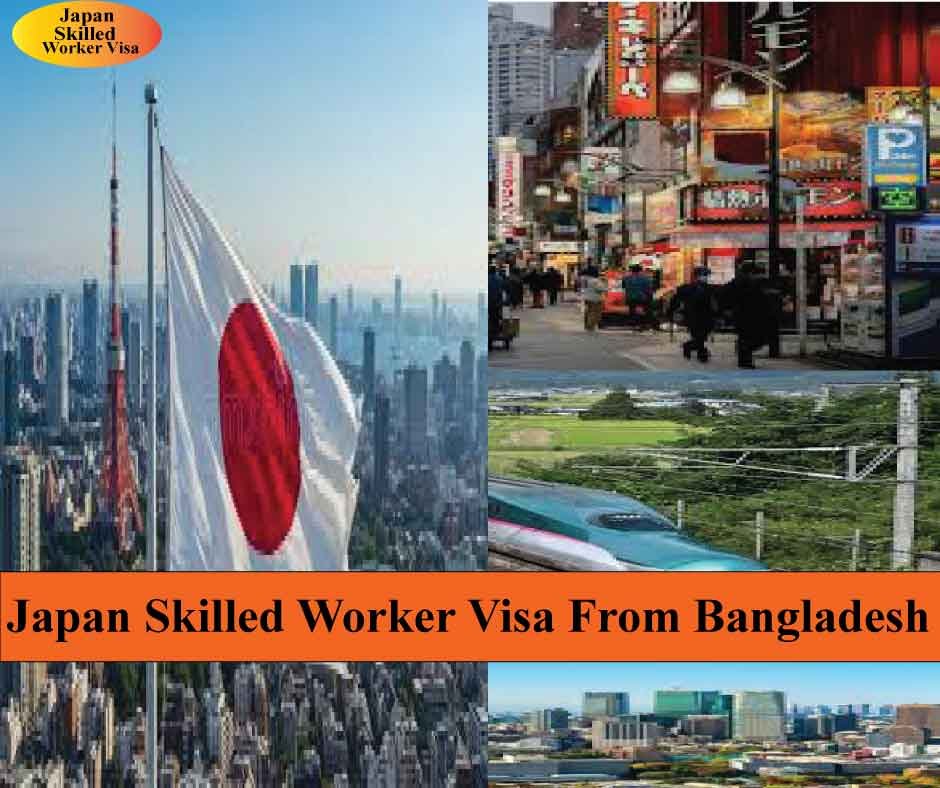

Bangladesh faces a persistent challenge: a workforce with latent potential but limited access to high-opportunity overseas employment. Many Bangladeshi professionals and technical workers dream of working in Japan, yet navigating the visa system, understanding requirements, and securing jobs remotely can become a major barrier. Meanwhile, Japan is experiencing labor shortages in sectors such as caregiving, construction, food service, agriculture, and more.
The initiative Bangladeshi Skilled Manpower for Japan 2025 aims to fill this gap by creating a structured pipeline: training, certification, job placement, and visa support. Under this vision, a robust program would help Bangladeshi applicants connect to Japanese employers via Japan Job Application Online Bangladesh platforms, thereby facilitating smoother transitions from Bangladesh to Japan.
In short: Bangladeshi skilled workers gain access, Japan fills labor gaps, and the process becomes transparent, efficient, and mutually beneficial.
In the sections that follow, we’ll define the visa & status options, explore benefits, map a step-by-step guide, share expert insights, actionable tips, FAQs, real examples, and conclude with a call to action.
‘সৌদি-জাপান যেতে একই টাকা লাগে কিন্তু সৌদি থেকে জাপানে প্রায় ১০ গুণ বেশি বেতন পাওয়া যায়
What Is the Japan Skilled Worker Visa for Bangladesh?
Understanding Japan’s “Specified Skilled Worker” (SSW) System
Japan’s most suitable pathway for labor migration of mid-skilled workers is under the Specified Skilled Worker (SSW) scheme, introduced in April 2019. mfasia.org+2ssw.go.jp+2
There are two main categories:
-
SSW (i) — for workers who pass both a Japanese language test and a vocational skills exam in one of the specified industries. ssw.go.jp+2Ministry of Foreign Affairs+2
-
SSW (ii) — for more advanced skilled workers, with higher requirements; fewer industries are covered, but the validity and renewal flexibility are better. jitco.or.jp+2東京・大阪のビザ申請なら行政書士法人やなぎグループ+2
The SSW visa is specifically intended for sectors with labour shortages (e.g., caregiving, food services, agriculture, construction, shipbuilding, manufacturing, cleaning, building maintenance) ssw.go.jp+3Ministry of Foreign Affairs+3企業向けサイト+3.
Key Differences: SSW (i) vs SSW (ii)
| Feature | SSW (i) | SSW (ii) |
|---|---|---|
| Validity / Renewal | 4 months, 6 months, or 1 year, renewable up to 5 years total Ministry of Foreign Affairs+2jitco.or.jp+2 | 6 months, 1 year, 3 years etc. with more flexibility and longer renewals jitco.or.jp+1 |
| Skill & Language Test | Required (unless coming from technical intern program) Ministry of Foreign Affairs+2ssw.go.jp+2 | Higher-level skill exam required; language test often waived in some cases ssw.go.jp+2東京・大阪のビザ申請なら行政書士法人やなぎグループ+2 |
| Family Visa | Not allowed under SSW (i) 東京・大阪のビザ申請なら行政書士法人やなぎグループ+2jitco.or.jp+2 | Under certain circumstances, family accompaniment is permitted 東京・大阪のビザ申請なら行政書士法人やなぎグループ+1 |
From Bangladesh, most candidates entering as new applicants would aim for SSW (i) initially.
Certificate of Eligibility (COE) & Status of Residence
One crucial document is the Certificate of Eligibility (COE), which the Japanese immigration authority issues to confirm that the applicant meets the basic conditions. During visa application, you must submit a valid COE. mfasia.org+3Ministry of Foreign Affairs+3Pebl+3
Once in Japan, you must obtain a status of residence consistent with your activity (i.e. Specified Skilled Worker). The visa and status of residence are separate but related processes. Ministry of Foreign Affairs+2Pebl+2
Benefits of the Japan Skilled Worker Visa for Bangladeshi Applicants
Why Should Bangladeshis Consider the SSW Route?
Stable Legal Employment and Income
SSW visa holders gain permission to legally work full-time in the designated sectors in Japan. This channel is safer than irregular migration, reducing risk of exploitation or illegal status.
Path to Skill Upgrading and Career Growth
Working in Japan lets you gain international exposure, improved technical skills, and Japanese language proficiency. Over time, this experience can open doors to better-paying roles or transitions into higher visa categories.
Longer Duration & Renewal Potential
The SSW visa (especially (ii)) allows renewals and continuity of stay, allowing a long-term presence in Japan, unlike many short-term or trainee visas. jitco.or.jp+2東京・大阪のビザ申請なら行政書士法人やなぎグループ+2
Filling Japan’s Labor Gaps — A Win-Win
Japan has officially announced plans to recruit from Bangladesh, targeting 100,000 workers over next 5 years to address labor shortages. The Daily Star
Likewise, the Bangladesh government is preparing projects to train and deploy skilled workers. The Financial Express+1
Social Benefits and Language Programs
Candidates from Bangladesh benefit from Japanese-language training programs (e.g. by the Japan Foundation) aimed at SSW candidates. Japan Patent Office
Bangladesh to Japan via SSW
Below is a structured, actionable path to follow for Bangladeshis aiming for the Japan Skilled Worker Visa via Japan Job Application Online Bangladesh or similar recruitment platforms.
Assessment & Preparation
-
Check eligibility
-
Age (usually 18+), good health
-
No disqualifying criminal record
-
Minimum educational or vocational qualification depending on the sector
-
Ability to take language and skills tests
-
-
Select a target sector
Review the list of industries eligible under SSW (construction, caregiving, food services, shipbuilding, etc.) Ministry of Foreign Affairs+2mfasia.org+2 -
Prepare documents in advance
-
Academic transcripts, certificates
-
Work experience letters
-
Police clearance, health certificates
-
Passport & identity proofs
-
-
Register on Japan Job Application Online Bangladesh
Use local job portals or Japanese recruitment platforms that allow Bangladesh-based applicants to apply remotely. Include your skills, certifications, and readiness to move.
Pass Required Tests (Language + Vocational)
-
Japanese Language Test
For SSW (i), you must pass either JFT-Basic or JLPT N4 (or equivalent) as required. Ministry of Foreign Affairs+2ssw.go.jp+2 -
Skill / Vocational Test
Each specified industry has a field-specific skills exam (conducted inside or outside Japan). Ministry of Foreign Affairs+3ssw.go.jp+3東京・大阪のビザ申請なら行政書士法人やなぎグループ+3
Note: Candidates who completed Technical Intern Training (TITP) Level 2 may be exempt from certain exams depending on field continuity. Ministry of Foreign Affairs+2mfasia.org+2
Secure a Japanese Job Offer
Once you are test-qualified, apply through Japan Job Application Online Bangladesh or partner channels. Employers in Japan must:
-
Offer you a contract in a sector recognized under SSW
-
Submit a support plan (for SSW (i))
-
Initiate the COE process
Sometimes, Japanese companies may pre-offer you a job pending test results, but final visa depends on passing the tests. 東京・大阪のビザ申請なら行政書士法人やなぎグループ+1
Apply for Certificate of Eligibility (COE)
Your employer (or a registered support organization) will file the COE with the local Japanese Immigration Services Bureau. This process typically takes 1–3 months. 東京・大阪のビザ申請なら行政書士法人やなぎグループ+2Pebl+2
You’ll need to supply supporting documents: contract, employer info, your qualifications, medicals, etc. ssw.go.jp+2mfasia.org+2
Apply for the SSW Visa (From Bangladesh)
Once COE is granted, bring that COE to the Japanese Embassy in Bangladesh or the VFS Japan office to apply for the visa. Ministry of Foreign Affairs+3VFS Global+3bd.emb-japan.go.jp+3
Required documents usually include:
-
Visa application form
-
Passport + photos
-
COE (original or certified copy)
-
Employment contract
-
Academic/work certificates
-
Any other documents requested by embassy 東京・大阪のビザ申請なら行政書士法人やなぎグループ+3Ministry of Foreign Affairs+3VFS Global+3
Processing may take days to weeks.
Arrival, Immigration & Start Work
After your visa is approved:
-
Travel to Japan.
-
At immigration, present documentation and get your Residence Card / status of residence.
-
Register addresses, open bank account, health insurance, etc.
-
Begin employment under terms of your contract.
Expert Insights & Considerations for Bangladesh Candidates
Tips From Recruiters and Immigration Consultants
-
Early test preparation is key — Being ready with JLPT / JFT and vocational exam results makes you more attractive to employers.
-
Choose your sector wisely — Some sectors have more demand or easier entry exams (e.g. food service, cleaning).
-
Leverage local training programs — Bangladesh govt and NGOs may offer Japanese language or technical training under SSW schemes.
-
Maintain close communication with employer — Ensure your employer is ready to submit COE and follow through support obligations.
-
Document translation & accuracy matter — All certificates should be clear, translated to Japanese or English where needed, and consistent.
-
Keep backup documentation — e.g. transcripts, employment proofs, health records in both original and copies.
Risk Factors & Mitigation
-
Failing exams — A backup plan (e.g. retraining or different sector) is wise.
-
Employer dropping out — Don’t resign from your current job until COE and contract are fully secured.
-
Visa refusal — Always ensure consistency, transparency, and full documentation.
-
Cultural or language adjustment — Prior language and cultural orientation helps reduce initial stress.
Real-World Use Cases & Illustrative Examples
-
Case 1: Food-service worker from Chittagong
Rahim, aged 25, passed JFT-Basic and a cooking vocational skill test. Through a Japanese restaurant chain posting under Japan Job Application Online Bangladesh, he got selected, COE was processed, visa approved, and he now works in Osaka. -
Case 2: Caregiver from Sylhet
Nazma, with prior experience in elderly care, attended training under a Bangladesh government-Japan cooperation project, cleared the care-sector exam, and was placed with a caregiving facility in Japan. -
Case 3: Construction sector candidate
Kamal, a technician in Bangladesh, registered his profile on Japanese recruitment portal for construction, passed the skills test, and was recruited by a Japanese construction firm; he is now working in Nagoya.
Each example demonstrates how Japan Job Application Online Bangladesh serves as the bridge between Bangladeshi applicants and Japanese employers.
Actionable Tips & Best Practices (Checklist)
-
Begin Japanese language learning early — aim for JLPT N4 or JFT-Basic
-
Research which Japanese industries are recruiting from Bangladesh
-
Keep all academic and professional records well organized
-
Apply to multiple job listings via Japan job portals to increase chances
-
Follow up with employers and support organizations regularly
-
Ensure you meet all health and background criteria
-
Use assistance services (government, NGOs) for guidance
-
Don’t rush — secure COE and contract before quitting current job
Frequently Asked Questions (FAQs)
Q1: Can I bring family to Japan on SSW (i)?
A: No, under SSW (i), family accompaniment or dependent visas are not permitted. 東京・大阪のビザ申請なら行政書士法人やなぎグループ+1
Q2: How long is the visa valid initially?
A: For SSW (i), typically 4 months, 6 months, or 1 year. Ministry of Foreign Affairs+2mfasia.org+2
Q3: Do I need to pass both language and skill tests?
A: Yes for SSW (i). For SSW (ii), sometimes the language test may be waived depending on past training. ssw.go.jp+2東京・大阪のビザ申請なら行政書士法人やなぎグループ+2
Q4: How long does COE processing take?
A: On average 1–3 months. 東京・大阪のビザ申請なら行政書士法人やなぎグループ+1
Q5: Where do I apply for the visa in Bangladesh?
A: At the Japanese Embassy in Dhaka or via VFS Japan Bangladesh. VFS Global+2bd.emb-japan.go.jp+2
Q6: Are there other types of work visas?
A: Yes — Japan also offers work visa types such as “Engineer/Specialist in Humanities/International Services,” Highly Skilled Professional visa, etc. Ministry of Foreign Affairs+2VisaGuide World+2
Internal Linking & SEO Opportunities
-
Link to articles or pages about Japanese language training in Bangladesh
-
Link to local government or NGO pages on migration or manpower export
-
Link internally to “Japan job application platforms”, “visa processing guides”, or “Bangladeshi skilled manpower schemes”
-
Use anchor text like Japan Job Application Online Bangladesh, Bangladeshi Skilled Manpower for Japan 2025, SSW visa process, Certificate of Eligibility Japan, etc.